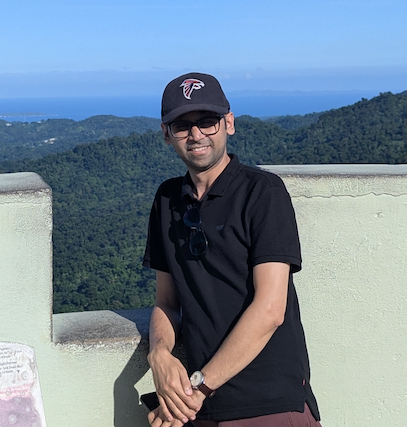
AI/ML Engineer building production data & LLM systems.
I'm an AI/ML engineer focused on turning models into production systems — from RAG and agentic applications to evaluation, inference, observability, and the infrastructure that keeps them reliable at scale.
Experience
Microsoft
- Engineered a RAG system for 500+ PDF invoices using BM25, vector search, and knowledge-graph traversal. Integrated citation-grounded generation, FastAPI serving, and monitoring, achieving 82% Recall@5 and 85% multi-hop question accuracy.
- Engineered a LangGraph multi-agent system to investigate billing and subscription discrepancies through MCP tools. Implemented checkpointing, human approval gates, and failure recovery, autonomously resolving 80% test cases with no unauthorized financial actions.
- Developed an invoice processing pipeline using PyTorch, LayoutLMv3, and ONNX Runtime to extract structured data and reconcile invoices with purchase orders, achieving 90% field-level F1 and 92% exception recall on a labeled evaluation set.
- Trained an XGBoost model to predict churn across 8,000 B2B customer accounts, using SHAP to explain predictions. Deployed FastAPI scoring, drift monitoring, and retraining checks, achieving 0.82 ROC-AUC on a time-based test set.
- Developed a shared evaluation framework using MLflow, Azure ML, and Prometheus across three ML services. Implemented drift alerts and deployment checks that detected 90% of seeded regressions (18 of 20) before release.
University of Florida
- Trained 3D CNNs in PyTorch to classify pulmonary nodules from LUNA16 CT scans. Benchmarked against 2D CNN baselines, achieving 0.88 ROC-AUC and 83% sensitivity on patient test data.
Samsung Research Institute
- Contributed to 10+ Android production releases reaching 50M+ users, helping achieve 99.5% crash-free sessions and 40% fewer production defects through automated testing, crash analysis, and performance optimization.
- Developed an Android image classification pipeline using MobileNet, TensorFlow Lite, and OpenCV. Optimized preprocessing and inference, achieving 88% image classification accuracy and 150 ms inference latency on a representative device.
Featured Projects
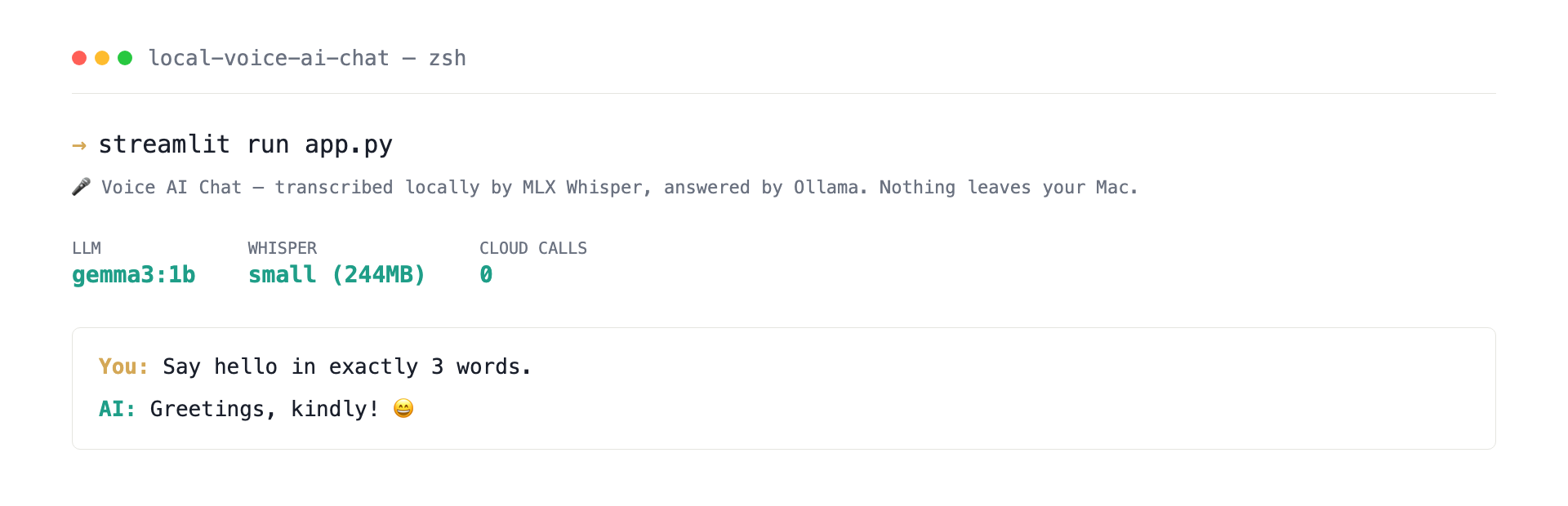
Local Voice AI Chat
Developed a fully local voice assistant for Apple Silicon using Whisper, Ollama, and quantized language models. Integrated streaming speech recognition, LLM inference, and speech synthesis, achieving 1.2-second time to first token without cloud inference.
On-Device Vision Pipeline
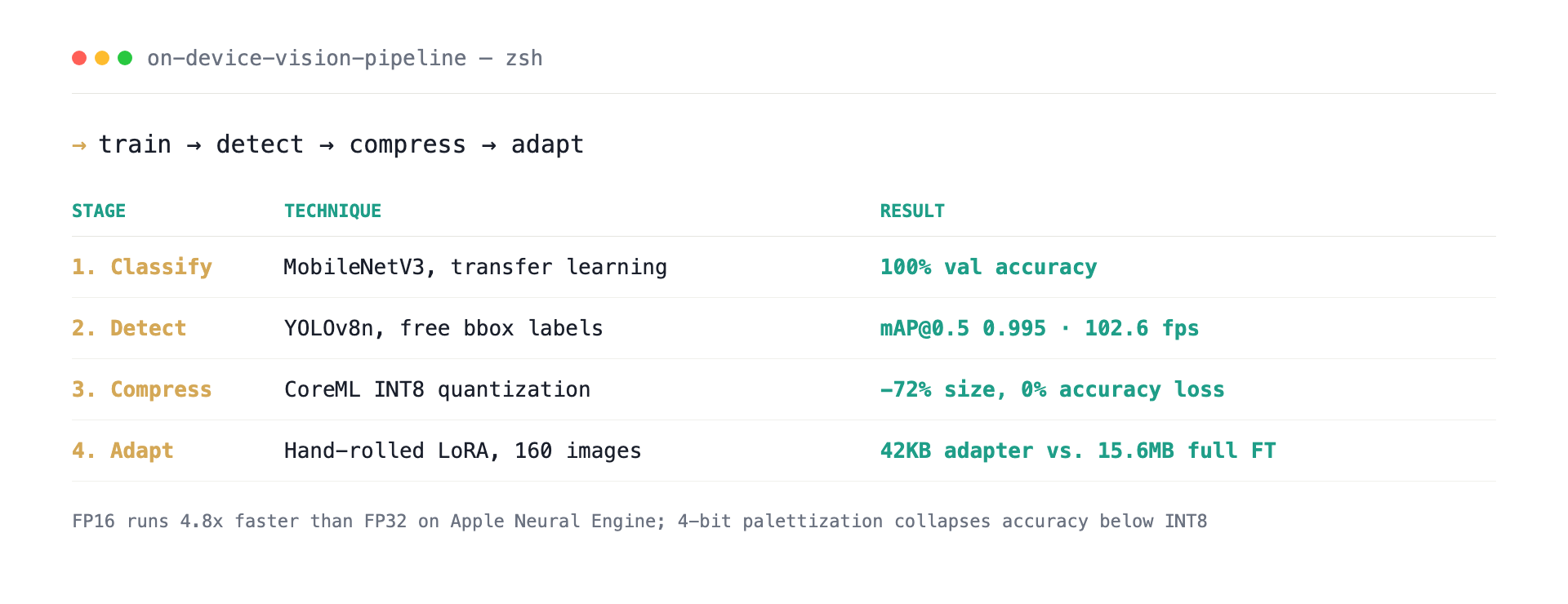
A four-stage computer vision pipeline: classify business charts (MobileNetV3, transfer learning), detect chart regions inside dashboards (YOLOv8, bounding boxes derived for free from layout), compress for on-device deployment (CoreML FP32 → FP16 → INT8 → 4-bit), and adapt to a new visual theme from just 160 images via a hand-rolled LoRA adapter.
Multi-Cloud LLM Platform
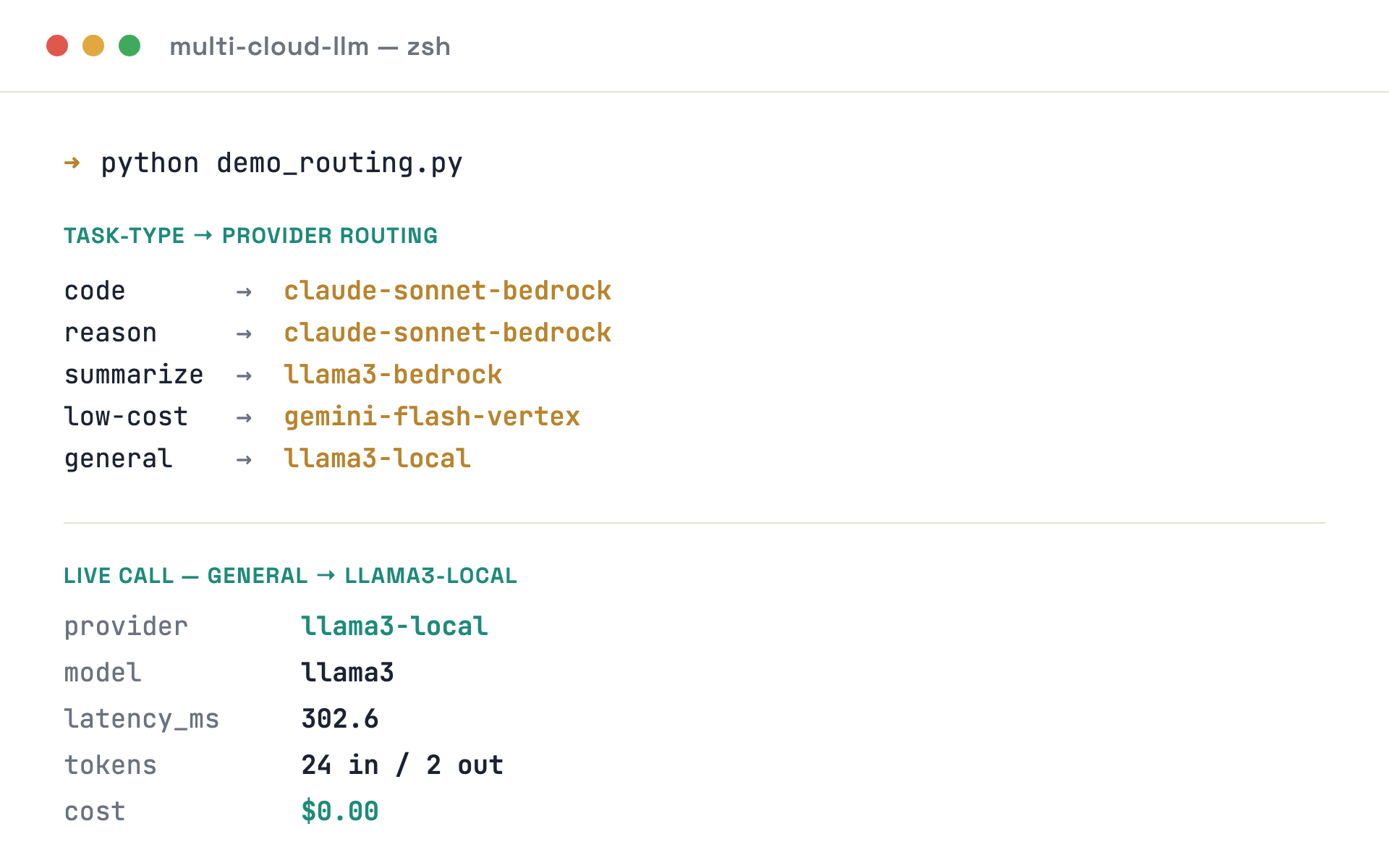
A provider-agnostic LLM routing layer spanning AWS Bedrock, OpenAI, and local Ollama models, instrumented with Prometheus metrics, wrapped in a LangGraph iterative research agent, and exposed to any MCP-compatible client (e.g. Claude Desktop) as callable tools over an MCP stdio server.
LLM Fine-Tuning with LoRA
Fine-tuned Phi-2 (2.7B) on Apple Silicon using PyTorch and parameter-efficient LoRA adapters, keeping the base model frozen to reduce training costs. Served the fine-tuned model through FastAPI and integrated evaluation workflows to measure task accuracy and inference performance.

About
I came to machine learning through computer science and statistics. CS taught me how to make things work; statistics taught me to question whether they actually do. That combination shapes how I approach AI. Training a model or getting an LLM demo to work is only the beginning. I'm interested in what comes next: how you evaluate it, deploy it, monitor it, understand its failures, and keep it reliable as the data and the world around it change. Much of my work sits in that space between model and production — retrieval and agentic systems, evaluation and guardrails, efficient inference, observability, and ML infrastructure. Outside of work, I spend a lot of time building and experimenting with these systems myself. I like getting beneath the abstraction: understanding what actually works, where things break, and why.